When considering outdoor soffit lighting, understanding IP ratings is crucial. These ratings define how well a fixture can withstand environmental elements. Industry expert John Smith, a leading lighting consultant, states, "Choosing the right IP rating can make or break your outdoor lighting design."
Outdoor soffit lights face rain, dust, and extreme temperatures. Therefore, the question arises: What is the best IP rating for outdoor soffit lighting? Generally, an IP rating of at least IP65 is recommended for outdoor applications. This rating indicates that the fixture is dust tight and protected against water jets.
However, not all situations are the same. Factors like location and exposure should influence your choice. For example, lights under a covered porch might require lower ratings than those directly exposed to rain. Always evaluate your specific context to ensure durability and longevity. Maintain a balance between aesthetics and functionality. Remember, the right choice today can save you from headaches tomorrow.
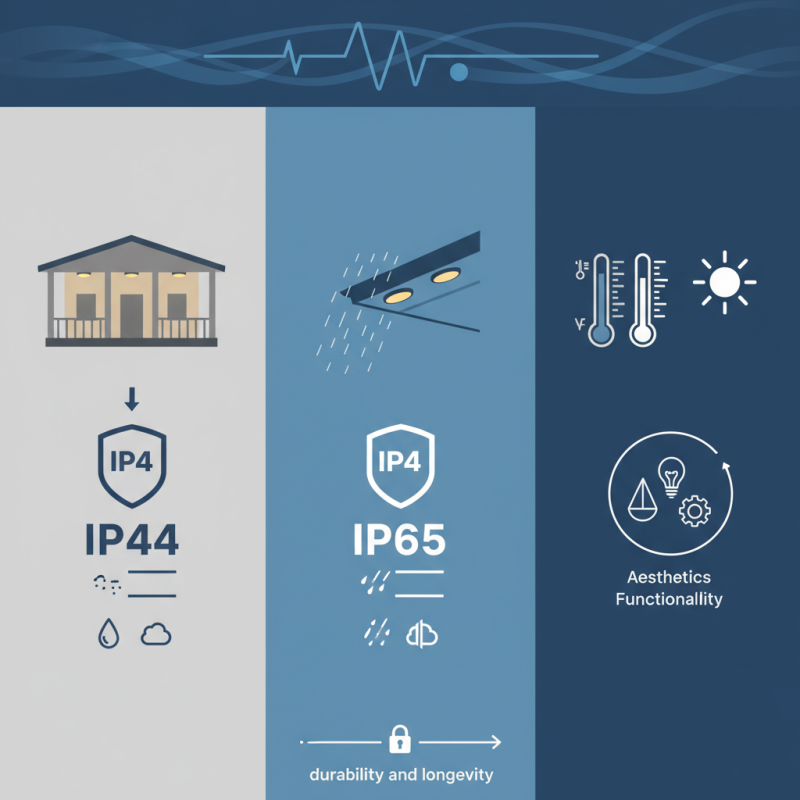
Understanding IP Ratings and Their Importance for Outdoor Lighting
When choosing outdoor soffit lighting, understanding IP ratings is crucial. IP stands for Ingress Protection. This rating indicates how well a light fixture resists dust and moisture. An IP rating is usually followed by two numbers. The first number measures solid particle protection, while the second one measures moisture protection.
For outdoor applications, a minimum IP rating of IP65 is recommended. This rating means the light is dust-tight and can handle water jets from any direction. Higher ratings, such as IP67, offer even more protection. They can withstand temporary immersion in water, making them ideal for extreme weather conditions. However, not all fixtures in the market meet these standards. Some may look robust but fail to provide adequate protection. It's essential to verify the manufacturer details and certifications before purchasing.
Choosing the right IP rating can prevent frequent replacements and repair costs. Lighting with insufficient ratings can lead to malfunctions or hazards. Therefore, consider your environment carefully. Assess the location, potential weather challenges, and installation height. Don't overlook the importance of long-term reliability. Sometimes, it's better to invest in quality fixtures than to compromise for cost. After all, safety is paramount in outdoor lighting choices.
Common IP Ratings for Outdoor Soffit Lighting Explained
When selecting outdoor soffit lighting, understanding IP ratings is crucial. IP stands for Ingress Protection, a standard that rates how well electrical enclosures resist dust and moisture. Common ratings you might encounter include IP65, IP66, and IP67. Each rating signifies different levels of protection, guiding consumers in their choices for outdoor settings.
Many outdoor lighting fixtures with an IP65 rating can withstand dust and low-pressure water jets from any direction. This is adequate for areas where lighting may not face heavy rainfall but still needs some protection. For locations exposed to harsher weather, look for IP66 or IP67. An IP66 rating indicates the fixture is resistant to powerful water jets, making it ideal for coastal areas where winds may carry rain with intensity.
Interestingly, despite the clear benefits, it's easy to overlook the specific needs of your outdoor space. A fixture rated IP20 might look aesthetically pleasing but offers no water resistance. Thus, evaluating your environment is essential. Consulting industry reports, such as those from the International Electrotechnical Commission, can provide insights into durability and reliability. Understanding these ratings enhances your ability to make informed lighting choices, ultimately impacting safety and ambient quality in outdoor areas.
What is the Best IP Rating for Outdoor Soffit Lighting? - Common IP Ratings for Outdoor Soffit Lighting Explained
| IP Rating |
Protection Against Dust |
Protection Against Water |
Recommended Use |
| IP44 |
Limited protection against dust |
Protection against water splashes |
Covered outdoor areas |
| IP65 |
Complete protection against dust |
Protection against water jets |
Exposed outdoor environments |
| IP67 |
Complete protection against dust |
Protection against temporary immersion |
Wet areas, near swimming pools |
| IP68 |
Complete protection against dust |
Protection against continuous immersion |
Underwater applications, heavy rain |
Factors to Consider When Choosing IP Ratings for Your Soffit Lights
When selecting outdoor soffit lighting, the IP (Ingress Protection) rating is crucial. This rating indicates how well the fixture resists dust and moisture. For outdoor applications, an IP rating of at least IP65 is often recommended. This rating means the lights are dust-tight and can withstand low-pressure water jets, making them suitable for various weather conditions.
Another important factor is the environment where the lights will be installed. For coastal areas, fixtures with higher IP ratings, like IP67 or IP68, are essential. These ratings ensure protection against submersion in water and contact with corrosive salt air. Industry studies reveal that improper ratings can lead to premature fixture failure. Over 30% of outdoor fixtures are returned due to inadequate IP ratings, highlighting the need for careful selection.
Also, consider additional features like temperature tolerance and material durability. These elements can enhance performance and longevity. Fixtures with robust housings resist physical impacts better. According to market research, well-rated fixtures can last up to 50,000 operating hours when installed correctly. This choice impacts not just functionality, but overall aesthetic appeal and safety. Making informed decisions is vital for lasting beauty and performance.
Recommended IP Ratings For Different Outdoor Environments
When selecting outdoor soffit lighting, the IP (Ingress Protection) rating is essential. This rating indicates how well a fixture can withstand exposure to dust and moisture. In outdoor environments, different conditions may require varying IP ratings to ensure durability and safety.
For areas that experience heavy rainfall or snow, an IP rating of at least IP65 is recommended. This rating means the fixture is dust-tight and can withstand low-pressure water jets from any angle. It provides excellent protection against harsh weather conditions. In contrast, for undercover patios or covered porches, an IP rating of IP54 may suffice. This rating indicates protection against limited dust ingress and splashes of water from any direction.
It's crucial to consider the specific location of your lighting. Sometimes, lower-rated fixtures can be damaged if improperly placed. Additionally, while many fixtures meet standard IP ratings, individual environments may present unique challenges, such as direct wind exposure or extreme temperatures. Evaluating these factors can lead to better long-term performance and reliability of outdoor lighting systems.
How to Ensure Proper Installation and Maintenance for Longevity
When installing outdoor soffit lighting, proper installation and maintenance are critical for longevity. According to the International Electrotechnical Commission (IEC), lights with at least an IP65 rating are best suited for outdoor environments. This rating signifies complete protection against dust and low-pressure water jets. A higher IP rating, such as IP67, offers protection against temporary immersion in water, which is ideal for areas prone to heavy rain or water runoff.
Regular maintenance is essential. It's advisable to clean the fixtures every few months to remove dirt and debris. A build-up can cause lighting to dim or become inefficient. Inspect wiring connections and seals annually. Damaged components should be replaced immediately to prevent moisture ingress, which can lead to electrical failures. An estimated 30% of outdoor lighting failures arise from improper sealing and moisture issues, underscoring the importance of diligent checks.
Using low-maintenance LED fixtures can extend the life of your outdoor soffit lighting. They consume less energy and generate less heat than traditional bulbs. However, not all LED products are equal. Ensuring that you select high-quality fixtures can prevent premature burnout. Investing in reliable lighting not only enhances your outdoor space but also reduces long-term costs associated with repairs and replacements.
FAQS
: An IP rating shows how well lighting resists dust and moisture. Higher ratings mean better protection.
An IP rating of at least IP65 is often recommended for outdoor use. It's suitable for various weather conditions.
Higher ratings like IP67 or IP68 protect against water submersion and corrosive salt air. This is essential in coastal environments.
Improper ratings can lead to early fixture failure. About 30% of outdoor fixtures are returned due to this issue.
It's advisable to clean fixtures every few months. Regular checks help prevent issues with dimming or inefficiency.
Inspect wiring connections and seals annually. Replace damaged parts to avoid moisture ingress and electrical failures.
They consume less energy and generate less heat, extending the lifespan of outdoor soffit lighting. Quality matters.
Yes, proper installation is critical. Poor installation can lead to issues like moisture ingress and fixture failures.
The choice of fixtures affects not just functionality but also the overall appearance of the outdoor space.
Approximately 30% of failures are due to improper sealing and moisture issues, highlighting the need for diligence.
Conclusion
When considering outdoor soffit lighting, a critical question arises: "What is the best IP rating for outdoor soffit lighting?" IP ratings, or Ingress Protection ratings, indicate how well a fixture can withstand exposure to moisture and dust. For outdoor environments, common IP ratings range from IP44, which protects against splashes, to IP65, which is dust-tight and can withstand powerful water jets.
Several factors influence the choice of IP ratings, including location, weather conditions, and the specific environmental challenges the lights will face. Recommended IP ratings vary accordingly, with more demanding environments necessitating higher ratings. Furthermore, ensuring proper installation and regular maintenance is essential for prolonging the lifespan of your outdoor soffit lights, making the selection of an appropriate IP rating crucial for durability and performance.
 Ledic Lighting
