 Ledic Lighting
How to Create Layered Lighting in a Small Bedroom?
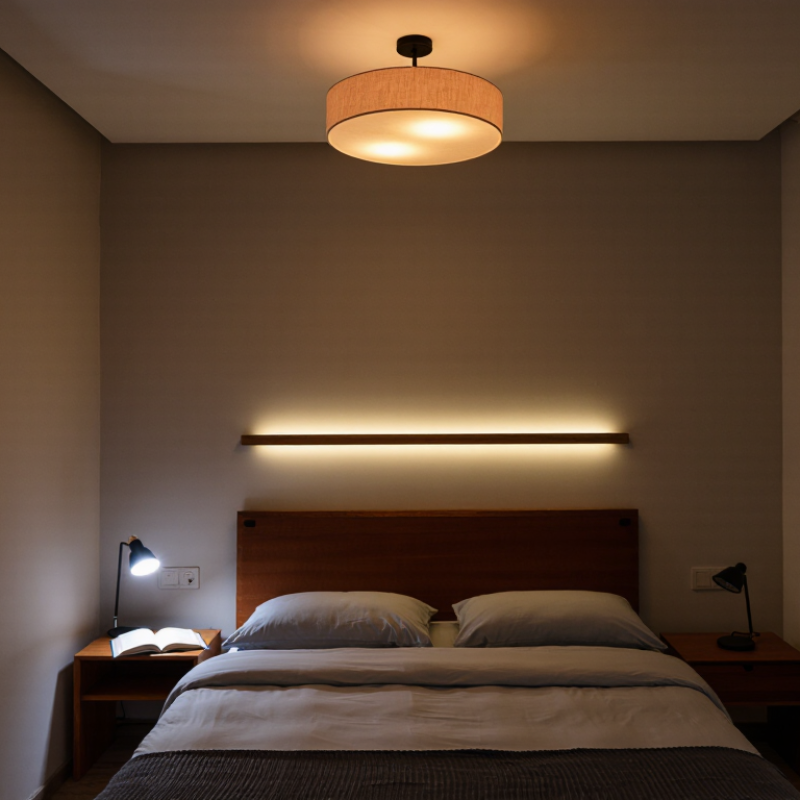
A small bedroom needs more than one bright ceiling light. Layered lighting combines ambient, task, and accent sources, letting the room shift from dressing to reading to winding down. The aim is not to add lamps everywhere. It is to place useful light where daily routines happen while keeping glare and visual clutter low. A warm ceiling fixture can provide general light, while an adjustable bedside lamp puts a focused pool of light on a book. A low-level wall light or dimmable LED strip can soften dark corners without taking up bedside-table space. Small changes. These details can make a compact room feel calmer, though they cannot fix every awkward layout.
How to create a layered lighting scheme in a small bedroom? Map where you dress, read, and move after dark. Then choose a ceiling source, one or two task lights, and a subtle accent source. Check bulb brightness, color temperature, shade direction, and switch access before buying. Dimmers are especially useful, but only when paired with compatible bulbs and fixtures. If you rent, plug-in sconces and table lamps can reduce installation work. For hardwired changes, follow local electrical guidance or hire a qualified electrician. A mirror can bounce light around, yet it may also reflect a bare bulb. That is easy to miss. The right scheme depends on room proportions, finishes, and personal comfort, so test one change at a time. Lighting is not a magic trick. Still, a carefully placed lamp can make bedtime feel less harsh and a cramped room more usable.
Assess the Bedroom’s Size, Layout, and Lighting Needs
Before choosing fixtures, measure the bedroom’s length, width, and ceiling height. Note where the bed, wardrobe, desk, and door sit. A narrow walkway can make a floor lamp impractical, even when it looks suitable on a plan. Small rooms surprise you.
Watch how daylight moves through the room. A north-facing window may leave one corner dim for much of the day, while strong afternoon sun can make a bedside lamp feel unnecessary until evening. Check the room at different times. Also note existing outlets and switches; a beautiful lighting plan is less useful if cords cross a walking path.
Then identify what each area needs. The ceiling light should provide comfortable general illumination, but it may cast shadows when you read in bed. A focused bedside light can handle reading, while a softer, low-level source near a wall can reduce harsh contrast. Keep shades and furniture in mind: a tall headboard may block light, and pale walls often reflect more than dark ones. I’d reassess after moving even one piece of furniture. The first layout guess is not always right.
| Assessment Area | Example Bedroom Data | Lighting Need | Suggested Layer | Practical Planning Tip |
|---|---|---|---|---|
| Room size | 3.0 m × 3.2 m; approximately 9.6 m² | Provide comfortable general illumination without making the compact room feel crowded. | Ambient lighting, roughly 100–200 lux for general use | Use a dimmable ceiling fixture or several compact recessed lights; plan the layout before choosing fixture sizes. |
| Room layout | Double bed against the longest wall; wardrobe near the entrance; one window on the opposite wall | Keep the walking route clear and light areas that are easily shadowed. | Ambient lighting plus localized wardrobe lighting | Position ceiling lights so they do not sit directly behind a person using the wardrobe or cast strong shadows across the room. |
| Natural light | Daylight enters through one window; the room is dimmer in the evening and on overcast days | Supplement daylight when needed while avoiding excessive brightness after dark. | Dimmable ambient layer | Use adjustable window coverings to manage daylight, and dim electric lighting in the evening for a softer atmosphere. |
| Bedside reading | Two people may read in bed at different times | Focused light at each side of the bed; reading tasks commonly benefit from approximately 300–500 lux on the page. | Task lighting from adjustable wall lights or bedside lamps | Choose independently switched, directional lights so one reader can use a light without illuminating the whole room. |
| Getting dressed | Wardrobe doors are beside the entry and may block light from the ceiling fixture | Even illumination inside the wardrobe and around clothing. | Task lighting from a wardrobe light or a nearby adjustable fixture | Place the light where open doors will not obstruct it; choose a suitable fitting for the installation location. |
| Relaxing before sleep | The bed is the main resting area and the room has limited floor space | Low-level, comfortable light for winding down and moving safely at night. | Accent or low-level lighting, such as a shaded bedside lamp | Use a separate switch from the main light and avoid placing exposed bright bulbs within direct line of sight from the bed. |
| Colour and light quality | Small room with pale walls and limited space for additional fixtures | A cohesive, comfortable appearance across lighting layers. | Warm-white sources, typically around 2700–3000 K, with consistent colour appearance | Check the colour temperature and colour rendering information on the product label; select lamps that make fabrics and skin tones look natural. |
| Controls and flexibility | Several lighting tasks take place in the same compact space | Allow each layer to work independently. | Separate switches or compatible dimmers for ambient, task, and accent lighting | Keep bedside controls easy to reach, and confirm that lamps, dimmers, and fittings are compatible before installation. |
FAQS
Measure the room’s length, width, and ceiling height. Mark the bed, wardrobe, desk, door, outlets, and switches. A floor lamp may block a narrow walkway.
Check the room in morning, afternoon, and evening. A shaded corner may need extra light, while strong afternoon sun can make a bedside lamp feel unnecessary.
Ambient light brightens the room. Task light reaches a book or wardrobe. Accent light adds a soft glow near a wall or headboard. Keep it simple.
Aim a movable lamp at the page, not your partner’s eyes. Leave space for a glass. Check the beam from bed before settling on its position.
Warm white light around 2700–3000 kelvin often feels restful. A more neutral tone can help with detailed tasks. Matching nearby lights usually looks calmer.
Yes. Lower the brightness before sleep, then raise it for dressing. Separate controls can help; one switch for every light may feel clumsy at night.
Try a diffuser, shaded lamp, or low-level light near a wall. A tall headboard may block a beam. Test the setup after dark.
Not necessarily. A lamp on one side and a wall light on the other may fit the furniture better. I’d still reassess after a few evenings.
Conclusion
How to create a layered lighting scheme in a small bedroom? Start by considering the room’s size, layout, natural light, and daily activities. This helps determine where illumination is needed and how to make the most of limited space. Combine three layers: ambient lighting for general visibility, task lighting for activities such as reading, and accent lighting to highlight details or add a sense of depth. Compact, adaptable fixtures can provide these layers without crowding surfaces or obstructing movement.
Place lights where they support comfort and function, such as beside the bed, near a desk, or along a dim corner. Choose brightness levels and color tones that work well together: softer light can create a restful mood, while clearer, brighter light can help with focused tasks. Use separate controls or adjustable lamps where possible, so the room can shift easily from practical daytime use to a calm evening retreat.
