What Are the Energy Savings of LED Spotlights?

Time:2026-11-16 Author:Ethan
0%

LED spotlights can reduce lighting energy use, but the actual savings depend on what they replace and how long they stay on. A traditional 50-watt halogen spotlight uses far more electricity than a comparable 6-watt LED. If each runs for four hours daily, that one replacement saves about 64 kilowatt-hours a year. The figure covers the spotlight’s electricity use, not the entire household bill.

What are the energy savings of switching to LED spotlights? A practical estimate starts with wattage, daily use, and the number of bulbs. Compare light output in lumens, too; wattage alone does not show whether a new spotlight will look equally bright. Beam angle and dimmer compatibility can also affect the result.

Small changes add up. Still, estimates are not promises. A room with rarely used spotlights may see modest savings, while kitchen or hallway lights used for hours can make a clearer difference. LED lamps often last longer than halogen bulbs, which may reduce replacement frequency, though actual lifespan depends on product quality and operating conditions. Check the packaging and manufacturer specifications before buying. I have found that choosing the wrong beam can make a lower-energy lamp feel like a poor replacement. That detail is easy to overlook.
What Are the Energy Savings of LED Spotlights?

How LED Spotlights Turn Electrical Power into Directional Light

An LED spotlight begins with a semiconductor chip, not a heated wire. When electric current crosses its junction, the chip releases photons. In common white LEDs, a phosphor layer converts some blue light into broader white light. A driver steadies the current, while a lens or reflector gathers the output into a useful beam. The result is light aimed at a kitchen counter, artwork, or workshop bench, rather than wasted across the ceiling. The U.S. Department of Energy’s LED Basics explains that LEDs are naturally directional. That matters. Less light needs redirecting, though poor optics can still create glare or uneven spots.

Efficiency depends on both the LED and the fixture. DOE’s Energy Saver guidance says LEDs use up to 90% less energy than incandescent lighting, but that figure is a broad comparison, not a guarantee for every spotlight. For a practical check, compare lumens with watts, then inspect the beam angle and color quality. A narrow beam may brighten one object while leaving nearby surfaces dim. That can lead people to add more fixtures, which erodes savings. I’ve seen this overlooked in small rooms. Directional light helps, but thoughtful placement still counts. DOE’s LED Basics also notes that LEDs generally send light where it is needed, reducing losses from redirection. Still, a spotlight is not automatically efficient just because it uses LED technology.

What Are the Energy Savings of LED Spotlights?

How LED Spotlights Turn Electrical Power into Directional Light

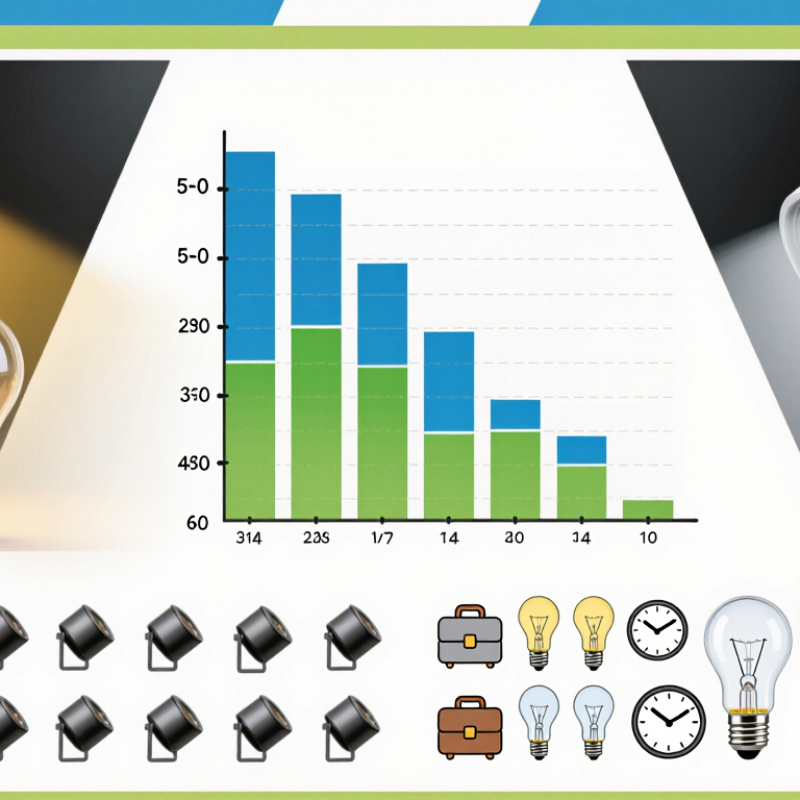
For similar directional light output of about 450 lumens, a 7 W LED spotlight uses approximately 86% less electricity than a 50 W halogen spotlight. Annual use is calculated at 3 hours per day for 365 days; actual results vary by lamp and usage.

How the U.S. DOE’s 75% Energy-Saving Benchmark Applies to LEDs

The U.S. Department of Energy’s 75% energy-saving benchmark compares LEDs with incandescent lighting, not every spotlight on the market. DOE’s Energy Saver guidance says LEDs use at least 75% less energy than incandescent bulbs. That is a baseline, not a guarantee for each room or fixture.

Consider a simple swap: a 50-watt halogen spotlight replaced by a 7-watt LED with similar brightness. At three hours of daily use, the estimated saving is about 47 kilowatt-hours per year for that lamp. Real results depend on beam angle, dimmer compatibility, and operating time. Small details matter. DOE’s 2019 Energy Savings Forecast of Solid-State Lighting projected that broader LED adoption could save about 569 terawatt-hours of U.S. electricity in 2035, compared with a scenario without LEDs. That national projection gives context, but it cannot predict one household’s bill. I would check actual wattage and light output before assuming a spotlight delivers the full 75% saving. Even a careful comparison can miss something: older dimmers may cause flicker or reduce performance.

What Are the Energy Savings of LED Spotlights? — How the U.S. DOE’s 75% Energy-Saving Benchmark Applies to LEDs

Illustrative comparison for spotlights providing comparable light output (approximately 500 lumens). The DOE’s 75% benchmark means using at least 75% less energy than an incandescent equivalent; it is a general benchmark, not a guarantee for every spotlight.

Comparison Power Energy use per year
(4 hours/day)
Annual energy saved
vs. 50 W baseline
Annual cost
at $0.16/kWh
Incandescent/halogen spotlight baseline 50 W 73.00 kWh — $11.68
LED at the DOE 75% savings threshold 12.5 W 18.25 kWh 54.75 kWh (75%) $2.92
Illustrative efficient LED spotlight 7 W 10.22 kWh 62.78 kWh (86%) $1.64

Calculation assumptions: Annual use = wattage × 4 hours/day × 365 days ÷ 1,000. Estimated cost uses $0.16 per kWh; actual electricity rates, usage, beam spread, and light output vary. Figures are rounded.

How Lumens per Watt Reveal LED Spotlight Efficiency

Lumens per watt (lm/W) measures how much visible light a spotlight produces for each watt of electricity it uses. Divide the lumen rating by the wattage to compare efficiency.

For example, a 600-lumen spotlight using 6 watts delivers 100 lm/W. A similar 600-lumen model using 8 watts delivers 75 lm/W. The first uses less power for the same stated light output.

That difference can lower energy use over time, especially in rooms where spotlights stay on for hours. Still, lm/W is not the whole story. Beam angle affects how concentrated the light appears; a narrow beam may brighten a countertop while leaving nearby areas dim. Check the lumen figure, beam angle, and dimmer compatibility before choosing. Also, actual savings depend on your old bulbs, daily use, and electricity rate. It is easy to focus too much on one number.

Tips: Compare spotlights with similar lumen ratings and beam angles. Look for clear packaging details. Keep the receipt, too; a spotlight that looks efficient on paper may feel too harsh in your room.

How to Estimate kWh Savings from Wattage and Operating Hours

What Are the Energy Savings of LED Spotlights?

How to Estimate kWh Savings from Wattage and Operating Hours

Estimate annual savings by subtracting the LED spotlight’s wattage from the old bulb’s wattage. Multiply that difference by daily operating hours and 365 days, then divide by 1,000. The result is kilowatt-hours saved per year.

For example, replacing a 50-watt halogen spotlight with a 7-watt LED saves 43 watts. Used four hours each day, one fixture saves about 62.8 kWh annually.

The calculation is simple. For ten fixtures, multiply that figure by ten, assuming they run for the same hours. If they do not, calculate each group separately.

The U.S. Department of Energy’s Energy Saver guidance reports that LEDs use at least 75% less energy than incandescent lighting. That broad comparison offers useful context, though your actual savings depend on the bulbs being replaced. Check the wattage printed on each bulb or fixture, not its brightness rating.

A spotlight’s beam angle and dimmer settings can also affect how much light you experience. The estimate is useful, but not perfect. Operating hours are often guessed, and hallway lights may stay on longer than anyone remembers. A simple plug-in or circuit energy monitor can help check usage where compatible.

Cite: U.S. Department of Energy, Energy Saver, “LED Lighting.”

How the DOE’s 25× Longer-Life Benchmark Affects Replacement Costs

DOE’s Energy Saver guidance says LED bulbs use at least 75% less energy and can last up to 25 times longer than incandescent bulbs. That lifespan benchmark matters most when a spotlight is awkward to reach. Think of a recessed ceiling light above a stairwell: each replacement can mean a ladder, time, and possibly a service call.

Here is an illustration, not a guaranteed product comparison. Assume a 50-watt incandescent spotlight and a 7-watt LED provide similar light, and the LED reaches 25,000 hours. At three hours of daily use, that is about 23 years. Using the DOE’s 25× benchmark, the incandescent equivalent would need roughly 25 bulbs over the same operating time, versus about one LED. At assumed prices of $1 and $6 per bulb, purchases would total roughly $25 and $6, before labor. The LED also saves about 43 watts while switched on, or around 47 kilowatt-hours annually at that usage.

Real results vary. The 25× figure compares LEDs with incandescent bulbs; it should not be applied automatically to halogen spotlights, which may last longer. Dimming, heat, ventilation, and switching patterns can also affect LED life. Check the rated hours and warranty for the specific spotlight, and include access costs in your estimate. A little less tidy than the headline number.

FAQS

How does an LED spotlight produce light?

Electric current crosses a semiconductor junction and releases photons. In many white LEDs, a phosphor layer turns some blue light into broader white light. A driver steadies the current, while a lens or reflector shapes the beam.

Why does an LED spotlight direct light so effectively?

LEDs naturally send light outward in a particular direction. This can reduce light lost while redirecting it. Poor optics can still cause glare or uneven patches.

How can I estimate yearly energy savings?

Subtract the LED’s wattage from the old bulb’s wattage. Multiply the difference by daily operating hours and 365, then divide by 1,000. The result is estimated kilowatt-hours saved each year.

How much could one spotlight save in a typical example?

Replacing a 50-watt halogen spotlight with a 7-watt LED saves 43 watts. At four hours daily, that is about 62.8 kilowatt-hours per year. A tidy estimate, not a perfect one.

Do LED spotlights always use 75% to 90% less energy?

Those figures are broad comparisons with older incandescent lighting, not guarantees for every fixture. Actual savings depend on the bulb being replaced and how long it runs.

What should I compare besides wattage?

Check lumens, beam angle, and color quality. A narrow beam may brighten a painting while leaving the nearby wall dim.

Can a narrow beam reduce my savings?

It can. If dim areas lead you to add more fixtures, total energy use may rise. Placement matters more than I once expected.

How can I make the estimate more accurate?

Record actual operating hours instead of guessing. A compatible energy monitor may help check usage. Hallway lights often stay on longer than people remember.

Conclusion

What are the energy savings of switching to LED spotlights? The answer depends on the bulbs they replace, how often they are used, and how much light is needed. LEDs direct light toward a specific area, so less electrical power may be wasted illuminating unwanted directions. Their efficiency can also be compared using lumens per watt: a higher figure means more light is produced for each unit of electricity.

The U.S. Department of Energy’s benchmarks provide useful context: LEDs can use at least 75% less energy than incandescent lighting and last up to 25 times longer. To estimate your own savings, subtract the LED’s wattage from the old spotlight’s wattage, multiply the difference by operating hours, and divide by 1,000 to calculate kilowatt-hours saved. Lower energy use can reduce running costs, while a longer service life may mean fewer replacements and lower maintenance expenses. Actual results vary with usage and the products being compared.

Ethan

Ethan

Ethan is a seasoned marketing professional with a deep expertise in our company's innovative product line. With a passion for sharing knowledge and insights, he takes the lead in regularly updating our corporate blog, where he explores industry trends, product features, and effective marketing......