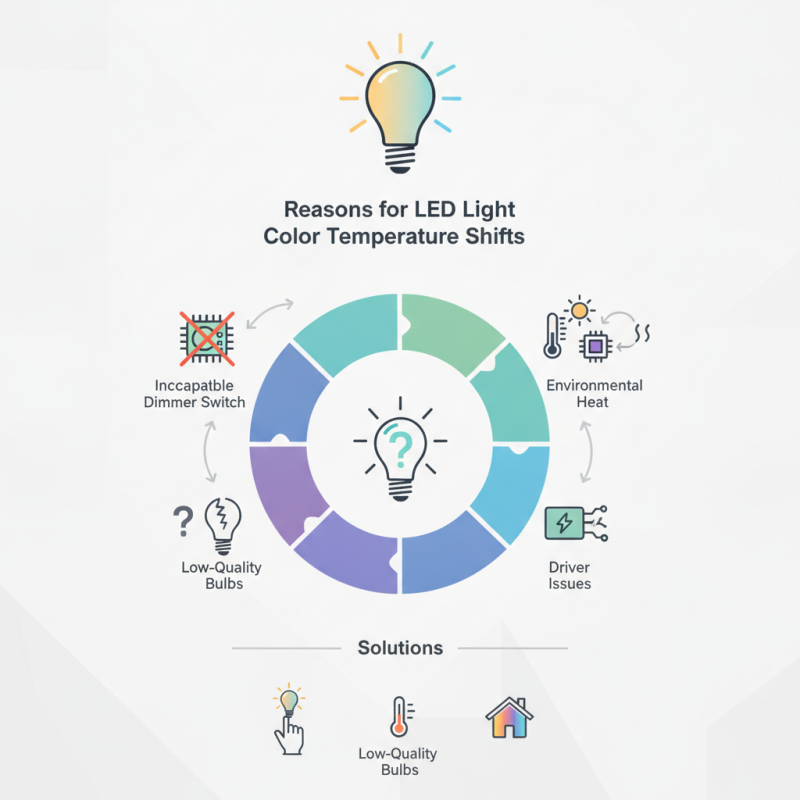
When you notice a shift in your LED light’s color temperature, it can be concerning. Many people ask, "Why is my LED light changing color temperature on its own?" This issue can arise from various factors, both technical and environmental. It's essential to understand that LED lights are sensitive to different influences.
One common culprit is the dimmer switch. Some dimmers are incompatible with LED technology, leading to unexpected changes. You may also want to consider the temperature of your surroundings. Heat can cause LEDs to behave unpredictably, altering their color output.
Moreover, not all LED lights are created equal. Low-quality bulbs might exhibit color shifts more readily. This inconsistency can prompt reflection on your lighting choices. Identifying the underlying reasons can improve your lighting experience and ensure you choose reliable products in the future.
Color temperature is a key aspect of LED lighting that affects mood and functionality. Measured in Kelvin (K), it ranges from warm (2700K) to cool (6500K). This variation impacts how we perceive spaces.
Studies show that different color temperatures can influence productivity and comfort. For instance, warmer light can create a cozy atmosphere, while cooler light enhances alertness and focus.
Understanding these temperature changes is crucial, especially when LEDs seem to shift unexpectedly. This can occur due to various factors. Temperature fluctuations in the environment can affect LED performance.
Additionally, some dimmers might not support specific LED technology, leading to color shifts. These inadvertent changes can create confusion. Monitoring your lighting setup can improve consistency.
In fact, research indicates that up to 30% of users may find color discrepancies unacceptable. This highlights the importance of education on LED behavior. Users should check compatibility with luminaries and dimmers to avoid surprises. The right combination ensures a stable color temperature, enhancing both aesthetic appeal and functionality.
LED lights have become the go-to choice for homes and businesses, but color temperature changes can be frustrating. One common cause is thermal fluctuations. LED bulbs generate heat, and if they are poorly ventilated, they can overheat. This leads to changes in color temperature, making light appear warmer or cooler than intended. The U.S. Department of Energy reports that inefficient heat management can reduce the lifespan of LEDs and cause performance issues.
Another factor is the quality of the LED driver. A low-quality driver can produce inconsistent power supply, affecting the light output. According to a 2022 industry report, over 30% of poor performance in LEDs can be traced back to these components. Additionally, some LED products are sensitive to voltage variations. Even slight changes in electricity can cause hues to shift. This is particularly true in regions with unstable energy supplies, which can lead to more noticeable color temperature fluctuations.
Lastly, aging components can also contribute. Over time, the phosphor coating in LEDs can degrade, altering the color temperature. Studies have shown that this can happen well before the end of a bulb's life. It's essential to consider these factors and not assume that all LED products will maintain consistent performance throughout their lifespan. Regular maintenance and quality checks can make a significant difference.
| Cause | Description | Frequency | Solution |
|---|---|---|---|
| Overheating | LED lights can change color temperature if they overheat due to inadequate ventilation. | Common | Ensure proper airflow and cooling for the fixture. |
| Dimming Features | Some LED lights change color temperature when dimmed. | Frequent | Choose dimmers compatible with your LED lights. |
| Aging | As LED lights age, their performance can degrade, leading to color changes. | Occasional | Replace old bulbs to maintain consistent color temperature. |
| Electrical Fluctuations | Variations in electrical current can affect LED color temperature. | Common | Use a voltage stabilizer or power conditioner. |
| Manufacturing Defects | Poor quality control can result in inconsistent color temperature outputs. | Rare | Select products from reputable manufacturers. |
Dimming and smart controls greatly influence LED light behavior. Many users find their LED lights changing color temperature unexpectedly. This can often occur when dimmers are not matched to LED technology. Incandescent dimmers may cause fluctuations, leading to that frustrating color shift.
Smart lighting systems can also contribute to color temperature changes. These systems adjust brightness and color based on user preferences or preset scenes. This flexibility, while convenient, can lead to unexpected results. A warm white light may suddenly shift to a cooler tone if settings are inadvertently altered. It’s essential to monitor these changes, as they can impact mood and ambiance.
Understanding the intricate relationship between dimming technologies and LED lights is crucial. Some dimmers may not support all LED bulbs, resulting in various color temperatures. Users should choose compatible devices to maintain consistent lighting quality. Reflecting on one's lighting setup can reveal the source of these color shifts. Always consider that even tiny adjustments can lead to noticeable changes in your space.
This chart illustrates the varying color temperatures of LED lights under different dimming levels and smart control settings. The data helps to understand how adjustments in brightness can affect the perceived color temperature of LED lights.
LED lights offer numerous advantages, yet their color temperature can sometimes shift unexpectedly. One significant factor behind this phenomenon is the surrounding environment. Ambient temperature plays a crucial role. Research shows that as the temperature increases, LED lights can emit a warmer hue. This effect stems from the semiconductor materials used in LEDs, which are sensitive to heat changes.
Moreover, the quality of the power supply affects color temperature. Fluctuations in voltage can cause LEDs to alter their output. A study by the Department of Energy indicates that 80% of LED complaints are linked to inconsistent power sources. Over time, these variations can lead to noticeable color shifts in lighting. Additionally, the placement of LED fixtures near reflective surfaces can intensify these changes. Reflections can create illusions of different color temperatures.
Humidity is another environmental factor often overlooked. High humidity can affect the thermal management of LED fixtures. Moisture can lead to overheating, altering the color output. Experts suggest keeping LEDs in areas with controlled humidity levels to minimize these effects. Frequent observations reveal that many users underestimate these environmental influences, leading to dissatisfaction with their lighting solutions.
When LED lights change color temperature unexpectedly, it can be frustrating. This issue often stems from fluctuations in voltage or dimmer compatibility. A study by the Lighting Research Center revealed that up to 30% of LED failures relate to electrical issues. Regularly testing the electrical stability of your circuit is essential for maintaining consistent lighting.
Another key factor is temperature. LED lights can shift color when they overheat. This happens when they lack adequate ventilation. For optimal performance, ensure your fixtures have sufficient airflow. Regular cleaning of the light fixtures can also help prevent dust buildup, which can impact heat dissipation.
Lastly, consider the quality of the LED driver. Low-quality drivers often lead to flickering and color changes. Reliable drivers should maintain stable current flow to LEDs. A 2022 report noted that using high-quality drivers could extend LED lifespan by up to 50%. Regular checks and investments in quality components are crucial for long-term performance. Addressing these aspects can significantly enhance your LED lighting experience.
: This often happens due to incompatible dimmers or fluctuation in voltage.
Test the electrical stability of your circuit regularly for consistent results.
Yes, LEDs can shift color if they overheat. Ensure good ventilation.
Incompatible dimmers can lead to fluctuations in color temperature, causing frustration.
Low-quality drivers can cause flickering and color changes, reducing lifespan.
Ambient temperature affects LEDs. Overheating can lead to color shifts. Monitor your setup.
Yes, cleaning prevents dust buildup and helps with heat dissipation for better performance.
Smart controls adjust brightness but can lead to unexpected color shifts if settings change.
Reflect on your lighting setup. A tiny adjustment may result in noticeable changes.
Yes, not all dimmers support every LED bulb, which can lead to inconsistent lighting.
Why is my LED light changing color temperature on its own?" is a common concern among users of LED lighting. This phenomenon can be attributed to several factors, including the inherent characteristics of LED color temperature, which can vary based on the type of LED and its design. Additionally, external elements such as dimming options, smart controls, and environmental conditions—like temperature and humidity—can significantly impact the light's appearance.
Understanding these variables is essential for maintaining consistent LED performance. Users should be aware that fluctuations may occur due to how the lighting interacts with smart home systems or in response to changes in its surroundings. By implementing troubleshooting strategies and being mindful of these factors, individuals can achieve a more stable and predictable lighting experience with their LEDs.

Ledic Lighting