Ledic Lighting
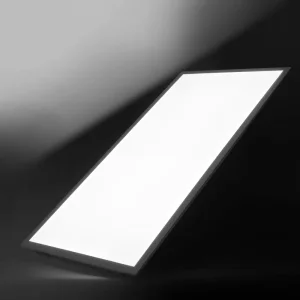
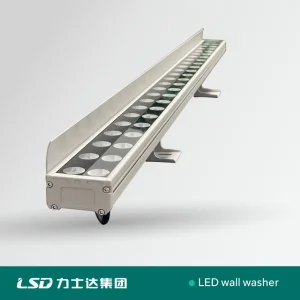
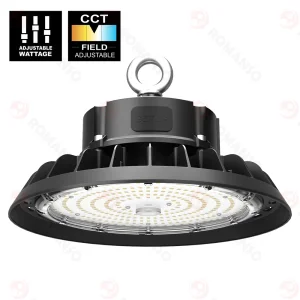
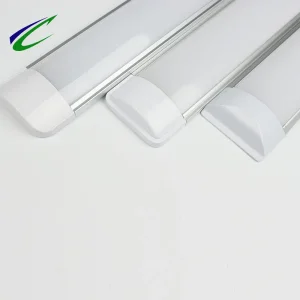
Yuyao Ledic Lighting Equipment Co., Ltd.
For nearly three decades, we have engineered professional-grade lighting systems that serve as the structural backbone of commercial spaces worldwide. Headquartered in Yuyao City, Zhejiang Province, China, Ledic Lighting is a state-level high-tech enterprise dedicated to research, manufacturing, and international export.
Our expansive manufacturing campus, spanning over 20,000 square meters, features fully vertically-integrated production pipelines. Equipped with advanced automated CNC machining lathes and high-tonnage automatic Zn-Al alloy die-casting lines, we systematically eliminate variations in physical tolerance to deliver lighting products of unmatched consistency.
By controlling every process in-house—from initial structural prototyping and thermal modeling to LED array SMT placement and secondary optical lens injection—we offer exceptional versatility across OEM and ODM programs. Our rigorous engineering processes ensure that every commercial fixture complies with international safety and performance criteria.
Why Direct-from-Factory Sourcing in Zhejiang, China Guarantees System Superiority
Evaluating the structural advantages that position Chinese industrial clusters at the center of the solid-state lighting supply chain.
Dynamic Industrial Clustering
Our strategic location in Yuyao places us within a two-hour logistics circle of raw material suppliers, specialized surface treatment works, and component producers, drastically reducing raw material turnaround times.
Advanced Tooling Engineering
Unlike assemblers, Ledic Lighting operates its own tooling and casting workshops. This in-house capability guarantees structural rigidity, highly efficient passive thermal performance, and exact physical dimensions.
Scalable Customization (OEM/ODM)
With internal design resources, we quickly adapt to international architectural specifications—whether modifying lumen output, altering driver specifications (0-10V, DALI, Zigbee), or tailoring mounting configurations.
Optical Precision & Thermal Engineering in Architectural Pendant Lighting
Architectural lighting requires a careful balance of visual comfort and mechanical durability.
For pendant luminaires, managing glare is crucial to occupant health. Our optical design incorporates micro-prismatic diffusers and deep-set cell louvers to achieve a Unified Glare Rating (UGR) below 19, meeting international workspace lighting codes.
Crucially, LED lifespan is directly tied to junction temperature management. Ledic designs utilize high-thermal-conductivity extrusion profiles (6063-T5 aluminum) that limit temperature rise to <15°C under continuous load, maintaining LED module lumen integrity over a nominal 50,000-hour operational life.
Global Projects & Adaptive Lighting Environments
From modern offices to industrial spaces, we match lighting output to the needs of the environment.
Corporate Workspaces
Linear pendant lights provide direct task lighting and indirect ambient light, reducing fatigue and boosting productivity in modern, open-plan workspaces.
High-Traffic Retail
High-CRI (Ra > 90) LED sources accurately bring out textures and product colors, helping retail stores present products in their best light.
Industrial Assembly
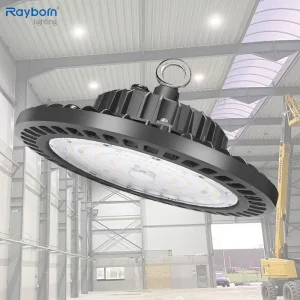
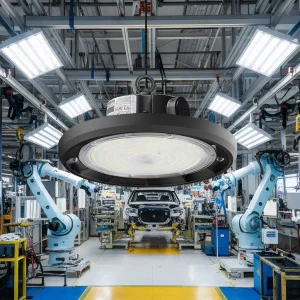
High-bay pendant luminaires built with dust and moisture resistance deliver clear, consistent lighting in harsh industrial settings.
Future Technology Trends in Commercial Lighting
The future of commercial lighting is defined by integration. System control protocols like DALI-2 (Digital Addressable Lighting Interface), IoT sensors, and human-centric circadian control systems are becoming standard in high-end specifications. At the same time, strict energy limits demand that products yield higher luminous efficacy, aiming for over 130 lumens per watt without sacrificing light quality or color rendering.
How to Evaluate an OEM/ODM Partner: A Guide for Procurement Professionals
Key checks to perform when vetting potential manufacturers for major development projects.
1. Verification of Certifications
Ensure the factory has valid, accredited testing reports for your market, including UL, ETL, and DLC for North America, CE and RoHS for Europe, and regional equivalents.
2. Quality Control & Testing
Confirm the manufacturer uses automated optical measurement tools (such as integrating spheres) and performs 100% burn-in aging tests under full load before packaging.
3. Driver & Component Vetting
A fixture is only as reliable as its driver. Insist on brand-name components or verify that custom drivers use premium solid capacitors with high MTBF ratings.
Frequently Asked Questions
Clear information on technical specs, custom options, and logistics for procurement managers and distributors.