Ledic Lighting
Featured Heavy-Duty LED Solutions for the Kabul & Herat Markets
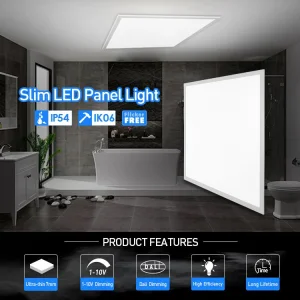
Explore our premium selection of grid-resilient LED panel lighting components custom-tailored to handle the frequent power fluctuations and demanding dust levels of Central Asian urban centers.
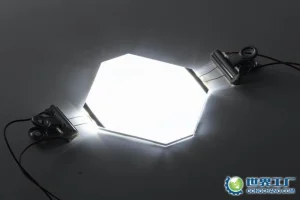
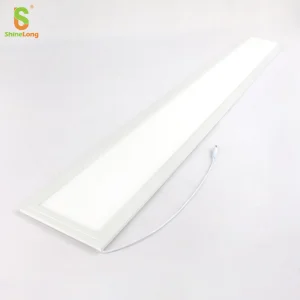
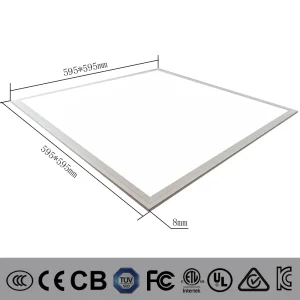
Afghanistan Energy Constraints & The Strategic Shift to LED Technology
Developing, managing, and securing lighting in Afghanistan is deeply affected by specific infrastructural challenges. The electricity grid of Da Afghanistan Breshna Sherkat (DABS) is highly reliant on imported power from neighbouring Central Asian republics (Uzbekistan, Tajikistan, and Turkmenistan) and Iran. The domestic grid experiences regular voltage fluctuations, load shedding, and supply disruptions. Consequently, local commercial enterprises, NGO offices, clinics, and manufacturing facilities in major centers like Kabul, Herat, Kandahar, and Jalalabad rely on backup diesel generators and hybrid solar photovoltaic (PV) power systems.
This hybrid power paradigm demands lighting that is not only energy-efficient but also resilient to sudden supply transitions. Traditional incandescent or low-efficiency tube lights consume excessive power and offer poor lifespans when subjected to rapid power cycles. High-performance, wide-voltage LED panel lights have therefore become the standard for modern construction and commercial upgrades throughout Afghanistan. By lowering power demand by up to 60-80% compared to legacy lighting, our LED panel installations drastically reduce load demands on local diesel generator networks and off-grid solar batteries.
Moreover, Afghanistan’s arid-to-semi-arid environment introduces high dust levels and seasonal temperature extremes. These atmospheric conditions pose challenges to electronic thermal dissipation. When importing LED panel lights into this market, purchasing agents and MEP contractors must prioritize thermal management and dust mitigation. To address this, Yuyao Ledic Lighting incorporates high-grade heat-sinks, rigid PMMA light guide plates, and IP-rated dustproofing. This ensures long-term operational performance in locations ranging from dry plains to high-altitude zones.
Global B2B Sourcing Context & LED Technical Evolution
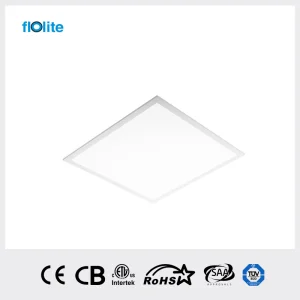
In the global commercial lighting market, lighting technology has moved beyond basic light emission toward human-centric, energy-resilient systems. Edge-lit and back-lit panel designs now incorporate advanced optical micro-structures that minimize glare while maximizing light distribution. The global supply chain has also shifted focus toward high-quality drivers, high color rendering indexes (CRI > 80/90), and compliance with international standards such as CE, RoHS, CB, and TUV.
For regional distributors, importers, and contractors sourcing from China, the focus is on raw material selection and production precision. While low-cost alternatives often utilize thin polystyrene (PS) diffusers that turn yellow over time, premium manufacturers use polymethyl methacrylate (PMMA) or high-grade polycarbonate (PC). These materials maintain their clarity and color consistency for years. In addition, the use of highly efficient SMD2835 or SMD5730 LED chips guarantees stable luminous output. This allows distributors in developing energy markets like Afghanistan to secure longer project warranties and minimize maintenance costs.
Corporate Overview: Yuyao Ledic Lighting Equipment Co., Ltd.
Yuyao Ledic Lighting Equipment Co., Ltd., established in 1996, is an industry-recognized innovator in high-efficiency LED lighting solutions. Headquartered in Yuyao City, Zhejiang Province, China, we operate as a high-tech manufacturing enterprise specializing in the research, development, production, and global export of resilient LED products. Backed by over two decades of engineering and manufacturing experience, Ledic Lighting has built a reputation for product quality, performance reliability, and comprehensive OEM/ODM services.
Manufacturing Capacity & Industrial Strength
Operating out of a modern manufacturing facility spanning 20,000 square meters, our factory utilizes high-precision machinery. This machinery includes automatic Zn-Al alloy die-casting lines, high-output CNC lathes, automated surface-mount technology (SMT) lines, and computerized goniophotometer testing equipment. These systems allow us to maintain dimensional accuracy and thermal consistency across our catalog of products.
By managing the entire production process in-house—from thermal design and die-casting to driver configuration, final assembly, and burn-in testing—we provide tailored ODM/OEM services for international partners. Our Quality Control (QC) Department monitors every stage of production, ensuring that finished products comply with international standards of electrical safety and operational efficiency.
A Global Vision Built on Quality, Integrity, and Innovation
Under our guiding principle of "Integrity, Quality, Innovation", we focus on long-term client relationships rather than short-term transactions. Our product lines serve commercial and residential sectors in Europe, South America, South Asia, and the Middle East. By adapting our designs for regions with unique energy environments, we help municipal, commercial, and residential clients transition to stable, energy-saving LED systems.
Technical Specifications for Unstable Energy Grids
For importers and electrical engineers coordinating procurement for projects in Afghanistan, standard consumer-grade LED lights are often insufficient. The local electrical environment demands commercial-grade fixtures engineered to withstand electrical noise, heat, and grid instability. Below are the key engineering specifications integrated into our LED panels:
♦Wide-Voltage Input Drivers (AC 85V - 265V)
Voltage drops are common in municipal grids in Kabul and other major urban areas, especially during peak load hours. Standard 220V drivers can flicker or fail under these conditions. Our isolated drivers operate reliably across a wide input range of 85V to 265V. This ensures consistent light output and protects the internal electronics during sudden voltage shifts.
♦Surge Protection Devices (SPD) & Over-Temperature Safeguards
Switching between municipal grid power and auxiliary diesel generators often generates high-voltage inductive spikes. Our commercial panel drivers include integrated metal oxide varistors (MOVs) and transient voltage suppressors (TVS). These components are designed to absorb surges up to 4kV, protecting the LED chips from premature degradation.
♦Active Power Factor Correction (PFC > 0.95)
Large-scale projects, such as administrative complexes or humanitarian distribution hubs, require high electrical efficiency. Our drivers maintain a power factor greater than 0.95. This reduces reactive power loads, optimizing energy use and lowering electrical stress on wiring and generator alternators.
♦Optimal Thermal Dissipation Structures
Arid, high-temperature summers can accelerate the lumen degradation of poorly designed fixtures. Our panels feature cold-rolled, zinc-aluminum alloy backplates and heavy extruded aluminum frames. This design maximizes conductive and convective heat transfer, keeping the LED junction temperature well below critical thresholds.
Localized Application Scenarios in Afghanistan
Our LED panel light variations are engineered to match the requirements of specific installation environments across Afghanistan:
1. Office and Institutional Workspace Upgrades
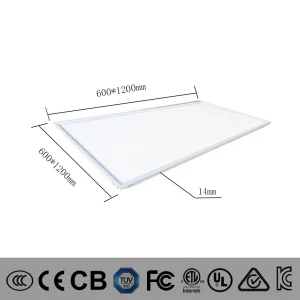
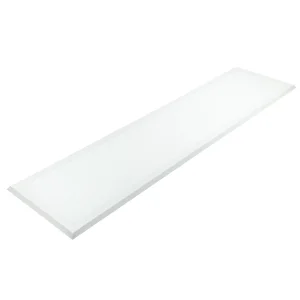
Modern commercial buildings and administrative offices in Kabul and Mazar-i-Sharif require comfortable, glare-free working environments. Our ultra-thin panels with UGR < 19 glare control provide uniform, diffuses light that helps prevent eye strain during long working hours. The high color rendering index (CRI) also ensures accurate color representation, which is ideal for design workspaces and administrative settings.
2. Healthcare and Humanitarian Facilities
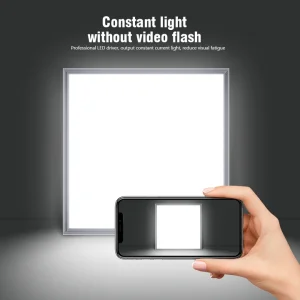
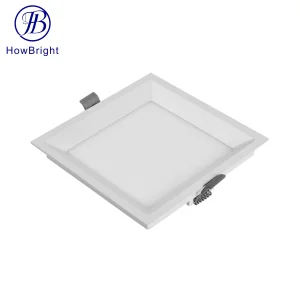
Medical clinics and field hospitals operated by international aid organizations and NGOs require clean, dust-sealed, and highly reliable lighting. Our IP54-rated recessed LED panels prevent dust ingress and are easy to wipe down. Equipped with CB and TUV-certified low-ripple drivers, these panels provide stable, flicker-free light that is critical for medical environments and does not interfere with sensitive diagnostic equipment.
3. Off-Grid Solar & Hybrid Municipal Projects
In rural provinces and suburban areas with limited grid connectivity, solar hybrid micro-grids are the primary source of power. Our high-efficiency LED panels draw minimal current, making them highly compatible with solar batteries. This energy efficiency helps extend system runtime overnight without over-discharging the batteries.
Complete Product Line for Wholesale Sourcing in Afghanistan
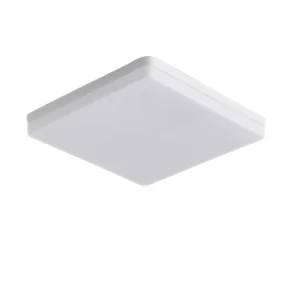
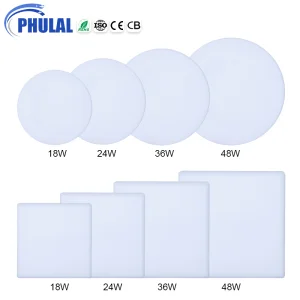
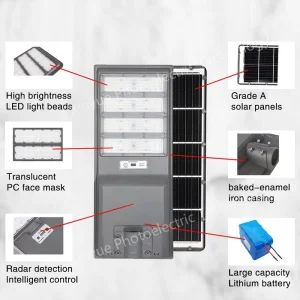
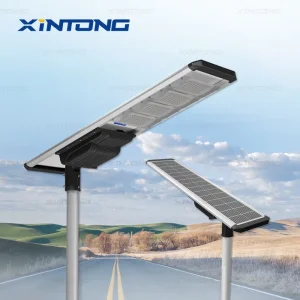
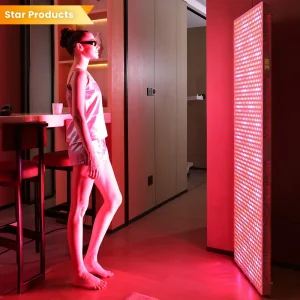
Browse our full catalog of LED panel lights, outdoor solar street lights, and specialized therapy panels, all available for bulk OEM/ODM manufacturing and direct shipping to Afghanistan ports and custom entry points.